One of the world's most beautiful lakes is slowly being overwhelmed by sewage, agricultural runoff, and waste. Here's what we're doing at Maestro Valley to help protect it, and why saving the lake starts with the land beneath our feet.
I wake up every morning overlooking one of the most extraordinary bodies of water I've ever experienced. Lake Atitlán, Guatemala.
An enormous volcanic lake surrounded by mountains, lush jungle, indigenous Mayan communities, and three magnificent volcanoes. There's something almost otherworldly about this place. The water changes colors throughout the day. Clouds roll across the volcanoes. Birds sing from the jungle canopy. Fishermen head out before sunrise.
And underneath all that beauty, something disturbing is happening.
We're slowly polluting the very ecosystem that gives this place life.
Sewage, agricultural chemicals, trash, and contaminated runoff are entering Lake Atitlán. The surrounding watershed is struggling to manage an increasing amount of human waste. And while large portions of the lake can still appear beautifully clear, its water quality has been deteriorating for decades.
This isn't some abstract environmental problem happening on the other side of the planet. I live here. My friends live here. Local families have lived here for generations. We've built our off-grid wellness sanctuary, Maestro Valley, in the mountains above San Marcos La Laguna.
Our lives, businesses, food systems, communities, and relationships are connected to this land. So when I see what's happening to the lake, I take it personally. And I think it's time we started doing something about it.
How Bad Is the Pollution in Lake Atitlán?
Let's start with some actual numbers.
In August 2025, Guatemala's Ministry of Environment and Natural Resources reported that 95% of wastewater discharges evaluated during 42 inspections failed to meet environmental standards. The inspections primarily involved hotels and other wastewater generators in the Lake Atitlán watershed. The problems included excessive nitrogen, suspended solids, organic pollution, and fecal bacteria.
A couple of months later, the ministry reported that all 15 municipalities evaluated were failing to fully comply with wastewater discharge regulations. Read that again. This is happening in one of Guatemala's most valuable and beautiful natural ecosystems.
And the sewage problem isn't new.
Lake Atitlán experienced an enormous cyanobacteria bloom in 2009. Scientific researchers documented dense patches covering approximately 40% of the lake's surface at the bloom's peak. Imagine looking out across this incredible volcanic lake and seeing huge portions of it covered in green bacterial growth. Sounds like a lovely location for your next wellness retreat.
Researchers connected those blooms to excess nutrients entering the water, particularly phosphorus and nitrogen. And the warnings haven't stopped.
In May 2026, Guatemala's lake management authority, AMSCLAE, issued an orange alert over cyanobacteria proliferation, advising people to avoid recreational activities in the water during the bloom. The alert was later lowered to yellow in July as conditions changed.
The important distinction is that pollution is not equally distributed throughout the lake. Water can be clearer in some locations while shorelines near towns, wastewater outlets, and areas affected by blooms carry greater risks.
A clear-looking lake is not automatically a clean lake. But neither does every contamination report mean the entire lake has turned into toxic sludge.
We need accurate monitoring, specific local data, and practical solutions.
Sources: Guatemala's wastewater inspection findings, scientific research on the 2009 cyanobacteria bloom, and 2026 cyanobacteria warnings.
The Lake Is Being Fed Something It Cannot Digest
Here's where this gets interesting. A lake is a living ecosystem. It contains bacteria, algae, aquatic plants, fish, microorganisms, and complex nutrient cycles that have developed over thousands of years. These organisms are constantly interacting with the chemistry of the water.
But what happens when the surrounding human population begins dumping more nutrients into the lake than its ecosystem can process?
You get an ecological imbalance called eutrophication.
Excess nitrogen and phosphorus can stimulate algae and cyanobacteria growth. When that biomass eventually dies and decomposes, microorganisms consume oxygen. Under certain conditions, this contributes to oxygen depletion, changes in aquatic life, and additional deterioration of water quality. Some cyanobacteria can also produce toxins.
Essentially, the lake starts receiving more biological input than its natural systems can manage.
It's almost like feeding someone an industrial diet for forty years and wondering why their digestion is struggling.
The environment matters. The inputs matter. And Lake Atitlán is constantly receiving inputs from the mountains and communities surrounding it.
When rain falls on the watershed, it carries material downhill. Healthy soil, roots, and vegetation can slow that movement, absorb water, and retain some sediment and nutrients.
But when we replace vegetation with concrete, compact the soil, remove trees, and channel runoff directly into waterways, we change that relationship. Instead of rainfall moving gradually through a living landscape, more water can rush downhill carrying whatever happens to be in its path.
Fertilizers. Sediment. Plastic. Organic waste. Contaminants. Straight toward the lake.
And unlike a river that continuously carries water toward the ocean, Atitlán is a closed-basin lake with no major surface outlet. What enters the watershed deserves serious attention.
Are Concrete Sewage Systems Really the Answer?
One of the approaches being discussed around Lake Atitlán involves wastewater collection systems, treatment plants, and potentially transporting treated wastewater outside the watershed. The idea is to intercept sewage before it reaches the lake.
There are proposals involving collection infrastructure and large-scale wastewater management systems. Researchers have examined several approaches, including advanced treatment, agricultural reuse, and moving wastewater outside the basin.
Now, I understand the intention. We absolutely need to stop untreated sewage from entering the lake. Proper wastewater treatment is essential for protecting both human health and aquatic ecosystems.
But I think we also need to question the larger design philosophy.
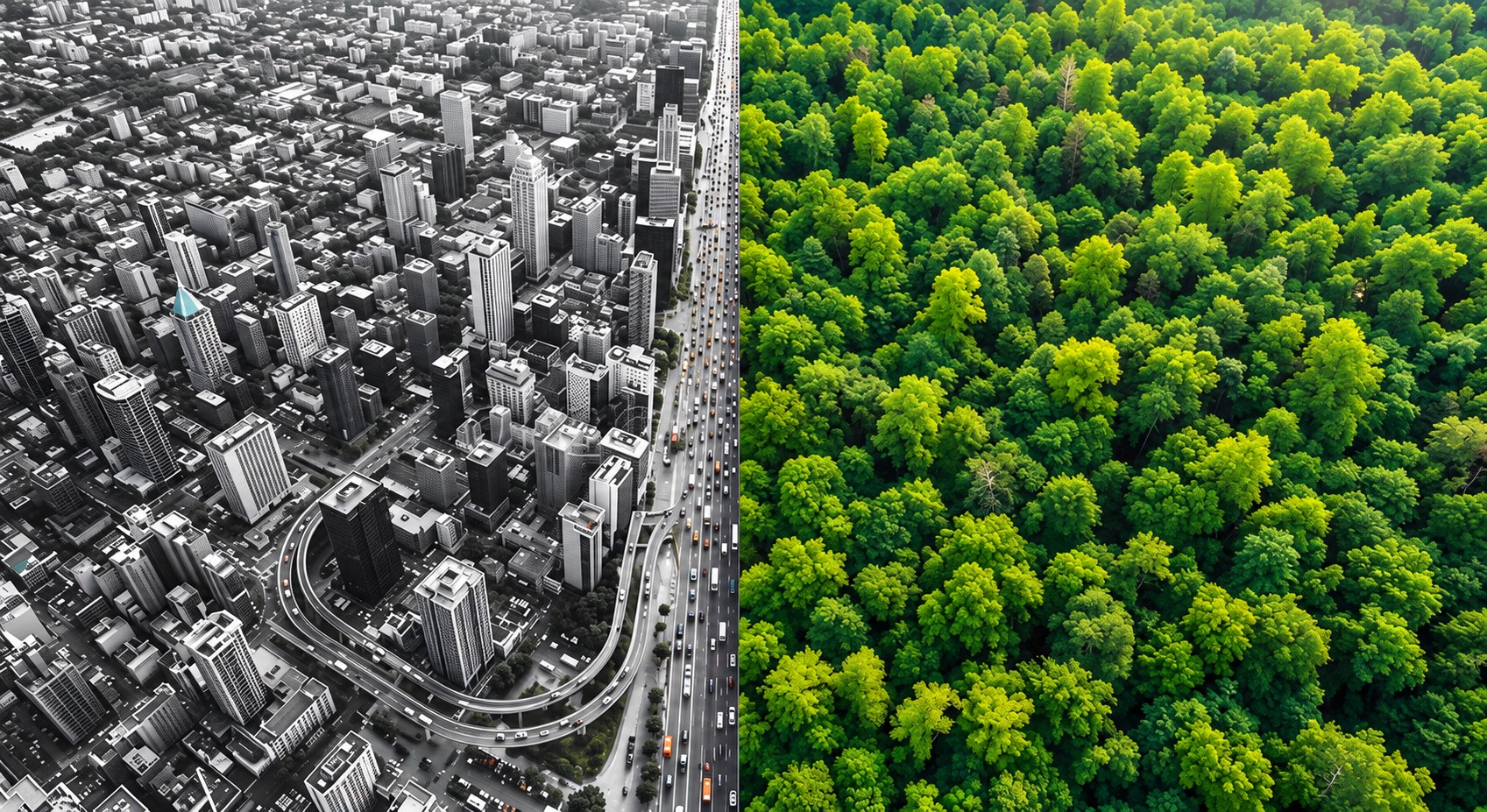
Why does our civilization so frequently approach environmental problems by building increasingly complicated systems to manage the consequences of how we've altered nature?
We pave over soil, remove vegetation, build massive settlements, and then construct enormous networks of concrete tunnels to deal with water that once moved through a functioning landscape.
It's an interesting sequence of decisions. And an expensive one.
The engineered approach isn't automatically wrong. Properly designed treatment systems can remove pathogens, organic waste, nitrogen, and phosphorus.
But disinfection alone, including chlorination where used, doesn't solve every nutrient problem. Different contaminants require different treatment processes, and wastewater infrastructure needs ongoing maintenance. We also shouldn't assume that every proposed system around Atitlán uses chlorine. The technologies and treatment methods vary by project.
For me, the missing piece in this conversation is the relationship between water, soil, vegetation, and the entire watershed.
We need infrastructure that works. But we also need landscapes that work.
Source: Research on integrated wastewater management inside and outside the Lake Atitlán watershed.
The Feminine Intelligence of Nature: Working With Water Instead of Against It
Nature rarely moves in perfectly straight lines.
Water curves through valleys, branches into streams, spreads across floodplains, sinks into soil, and nourishes entire ecosystems along the way.
Roots form intricate networks. Microorganisms process organic material. Plants absorb nutrients. The entire thing operates through relationships.
There's something almost feminine about this intelligence. Flowing, receptive, regenerative, adapting to the landscape instead of demanding that the landscape adapt to it.
Compare that with our industrial tendency to channel everything into straight pipes, concrete tunnels, and isolated mechanical systems.
I'm not suggesting we replace sewage treatment plants with positive affirmations and banana trees. Please don't.
But I do believe we should be designing far more of our infrastructure around the principles that make natural ecosystems resilient.
Water doesn't necessarily need to become waste the moment it touches the ground.
Rainwater can become a resource when we design the landscape to receive it.
Which brings me to what we're doing here in Guatemala.
What We're Doing at Maestro Valley to Help Protect Lake Atitlán
At Maestro Valley, our off-grid wellness sanctuary above San Marcos La Laguna, we're working with permaculturists and local community members to improve how water moves through our property.
Our goal is simple. Slow the water down. Help it enter the soil where appropriate. Grow more vegetation. Reduce erosion. And prevent unnecessary sediment and pollution from traveling downhill toward Lake Atitlán.
Instead of allowing every heavy rainfall to rush through the property and carry exposed soil into the surrounding drainage systems, we're exploring ways to capture and distribute clean stormwater throughout the landscape.
This includes earthworks, vegetation, and water-loving plants.
Banana trees are especially interesting because they grow rapidly, produce significant biomass, and thrive in environments with sufficient moisture and nutrients. We're also incorporating plants such as yarrow and other species that support our broader permaculture system.
The goal is to create a landscape where water moves through healthy soil and vegetation rather than racing across compacted ground.
Soil organisms, organic matter, and plant roots can help retain certain pollutants and nutrients. This is part of the science behind green infrastructure, rain gardens, vegetated swales, and constructed wetlands.
These systems can reduce runoff and improve water quality when they're correctly designed for local soil, rainfall, slopes, and contamination risks.
There's an important distinction here: stormwater management is different from sewage treatment.
Raw sewage and contaminated wastewater cannot simply be soaked into the ground beside banana trees and assumed safe. Pathogens and pollutants may reach groundwater or move elsewhere in the watershed.
Wastewater reuse requires appropriate treatment, engineering, testing, and safe separation from drinking-water sources. We're interested in working with these natural principles responsibly.
And we want to keep learning from the local people who understand this land, its rainfall, its soils, and its seasonal rhythms.
This is the kind of environmental work I want to see more of. Practical. Local. Regenerative.
Not another conference filled with people discussing sustainability inside an air-conditioned hotel while sipping water from disposable plastic bottles.
Source: US Environmental Protection Agency: Green Infrastructure and Groundwater Protection.
The Soil Is More Important Than We Realize
Everyone talks about saving the oceans and lakes. Which is wonderful. But we rarely spend enough time talking about the soil.
Healthy soil is one of the most important pieces of the entire water cycle. Soil structure, vegetation, and organic matter influence how rainfall infiltrates, how nutrients are retained, and how much sediment gets washed away.
When land becomes degraded, compacted, or stripped of vegetation, runoff and erosion can increase. That sediment may carry phosphorus and other substances into nearby water.
Over time, thousands of seemingly insignificant decisions throughout a watershed can add up.
One property removes its trees. Another paves over the soil. Another dumps waste into a drainage channel. Another applies excessive fertilizer.
Then the rain comes. And eventually much of it moves downhill. Toward the lake.
We wonder how such an enormous body of water could possibly be affected by individual people. But the lake is connected to the collective behavior of everyone living around it.
That's why I think the solution needs to begin long before pollution reaches the shoreline.
Protect the soil. Restore vegetation. Reduce unnecessary chemical inputs. Capture clean rainwater appropriately. Treat sewage properly. And create communities that understand the relationship between their daily activities and the larger ecosystem.
The Trash Problem: Start Picking Up Your Own Damn Neighborhood
Another major challenge around Lake Atitlán is solid-waste management.
Trash collection and disposal infrastructure differ considerably between communities, and waste can accumulate in drainage areas, roadsides, and waterways. Rain then carries some of that material toward the lake.
Plastic bottles, packaging, food containers, and all the other little monuments to modern convenience.
I've been making a point of picking up trash whenever I can. Around the property, on walks, and in the places we spend time. It's simple.
And that's precisely why I think it's important.
You don't need to organize a global environmental conference to pick up a plastic bottle.
You bend down. You pick it up. You dispose of it responsibly.
Congratulations. You've successfully performed environmental conservation without requiring a government grant.
Obviously, individual litter collection isn't going to solve an entire watershed's waste-management challenges.
We need functioning collection systems, recycling infrastructure, community education, and responsible disposal.
But personal responsibility and larger infrastructure can exist together. One does not eliminate the need for the other.
And I'd rather see someone consistently taking care of their neighborhood than endlessly posting about how terrible the world has become.
If Lake Atitlán Dies, We All Lose
There's a financial aspect to this that I think is important to acknowledge.
Tourism supports many businesses and livelihoods around Lake Atitlán. Restaurants, guides, boat operators, accommodations, retreat centers, farmers, artisans, and countless local families depend in different ways on the surrounding environment.
At Maestro Valley, we've invested years into building a place where people can come experience nature, community, movement, and holistic living.
Through Bioculture Retreats, we host experiences that bring people together from around the world.
People come here because there's something special about this lake and its surrounding mountains. If the lake's health deteriorates substantially, that affects our business. Of course it does.
But it affects something much bigger. Local families who rely on the lake. Communities with deep ancestral and cultural relationships to the water. Wildlife. Fishermen. Farmers. Children who deserve to grow up with a healthy ecosystem. And future generations who haven't even been born yet.
This isn't simply a tourism problem.
It's a question of whether we're willing to protect the environment that makes our lives possible.
A recent scientific study examining 15 years of Lake Atitlán data also found that the lake has been warming by approximately 0.34°C per decade, with changing temperature and mixing conditions influencing deep-water oxygen levels and water quality.
Meaning the lake is dealing with more than human waste alone. It's experiencing changes in its physical environment, too.
Source: 2026 research on climate change, lake mixing, and water quality in Lake Atitlán.
We're Working Toward a Petition to Help Save Lake Atitlán
My goal is to help organize more attention, collaboration, and meaningful action around protecting the lake.
That includes developing a petition and bringing together local residents, environmental specialists, community leaders, business owners, visitors, and people who care about Lake Atitlán.
I'd love to see more transparency around wastewater discharge, accessible water-quality monitoring, improved waste collection, and investment in solutions that combine effective sanitation with watershed restoration.
We also need to support the people and organizations already doing this work.
The solution shouldn't be outsiders arriving with a heroic plan to save a place whose communities have cared for it for generations.
It should involve listening, collaborating, and using whatever resources we have to support practical improvements.
As we develop this effort, I want to focus on several concrete priorities:
Prevent untreated sewage from entering the lake. Support wastewater systems that actually remove harmful contaminants and can be operated and maintained over the long term.
Restore the watershed. Protect vegetation, reduce erosion, and introduce appropriately designed water-retention and soil-regeneration practices.
Improve waste management. Expand reliable trash collection, responsible disposal, and community cleanup efforts.
Make water-quality information accessible. People deserve to know where contamination is occurring, which areas are affected by blooms, and what precautions are necessary.
Bring communities together. Collaborate with local residents, indigenous communities, researchers, businesses, and environmental organizations already working to protect Atitlán.
And most importantly, start putting these ideas into practice.
A petition can help bring attention to a problem. But the lake doesn't need another beautiful document collecting digital signatures while plastic bottles float past the shore.
It needs people who are willing to participate.
The Future of Nature Begins Locally
We live in a strange time.
Artificial intelligence is advancing at ridiculous speeds. Massive data centers require electricity, water, and infrastructure. Cities continue expanding. Manufacturing and technology make it increasingly easy to live without direct contact with the natural world.
And somehow, while we're busy building the future, we're still struggling to manage the basics. Clean water. Healthy soil. Food. Waste. Community. The foundations of life itself.
I'm fascinated by technology and what humans are capable of creating. But I question any definition of progress that overlooks the living systems supporting everything we've built.
We don't need to choose between civilization and nature. We need to become considerably more intelligent about how the two interact.
And this applies just as much to someone living in the United States as it does to someone living beside Lake Atitlán.
Look at your neighborhood. Where does the water go when it rains? Where does your trash end up? What happens to the soil when a new development gets built?
Are there opportunities to plant trees, restore vegetation, support local farms, organize cleanups, or protect waterways?
These questions sound small. Until thousands of people start asking them.
You don't have to solve every environmental crisis on Earth.
Start taking responsibility for the little piece of Earth you're standing on. That's where meaningful change becomes something you can actually participate in.
Come to Maestro Valley and Be Part of Something Bigger
One of the reasons we built Maestro Valley was to create a place where people could experience a different relationship with nature.
We're located in the jungle above San Marcos La Laguna, overlooking Lake Atitlán, Guatemala. Our off-grid wellness sanctuary includes private accommodations, outdoor movement spaces, a wood-fired sauna, gardens, gathering areas, and spaces for retreats and community experiences.
We're continuing to develop our permaculture systems and improve how our property works with the surrounding environment.
And we want to connect with more people who care about regenerative living, land stewardship, and creating healthier communities.
If you're a retreat facilitator, wellness creator, educator, or group organizer, you can rent the property and host your own experience.
You can also join us through Bioculture Retreats, where we bring together people who care about health, nature, creativity, and genuine human connection.
I don't want Maestro Valley to be another beautiful property that happens to overlook a lake. I want us to actively contribute to protecting the environment we're fortunate enough to live within.
And I hope our work encourages other property owners and communities around the lake to explore what they can do locally.
Because if there's one thing I've learned from living closer to nature, it's that we're far more connected to our surroundings than modern life would have us believe.
The lake feeds the land. The land feeds the lake. And the way we care for one ultimately affects the other.
Explore Maestro Valley, rent the property, or come experience our sanctuary →
Join an upcoming Bioculture Retreat at Lake Atitlán →
Let's keep this incredible place alive for the generations who come after us.